 Ernie.SG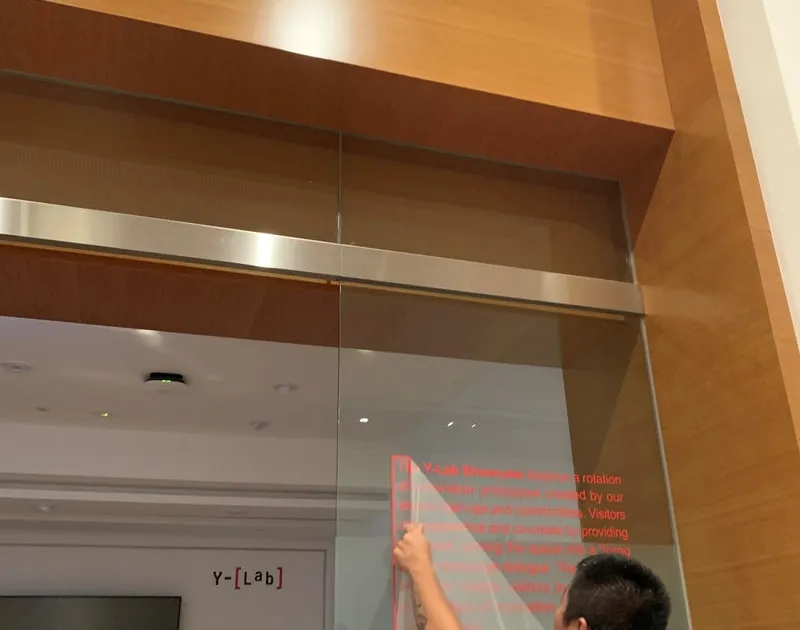

Gradient Descent as Metaphor for Social Progress
Artificial intelligence (A.I.) can be an ally against discrimination while accentuating our artistry, or can it? If history is to be of any guidance, it is that technophobia is old (but persistent) news, that the path of technological development and its impact on societies is hardly linear. We are stuck on our local mountains trying to reach an optimum but visibility is limited; your only frame of reference is the steepness of the hill at your present location and the next direction. In other words, gradient descent - the iterative first-order optimisation algorithm at the heart of most machine learning (ML) and deep learning (DL) applications - is a very apt metaphor for mapping societal progress.
I digress. If I hadn’t lost you by this point, my position on how we should situate our relationship to technology and tools is that: just as we don’t ban knives because they can be used to kill, we risk throwing out the baby with the bathwater when we resist new technologies because we don’t know how to best make use of them (yet). Societies tend to cop out and blame the tools and the machinery because these things cannot speak for themselves and are easier to fix than the prevalent culture and norms. Yet we let ourselves off the hook far too easy; it is easy to forget how much things can change in a generation or two and that hasty generalisations get us nowhere save for digging ourselves into the hole of inductive fallacies.
Automate Away Every Damn Thing?
Anyway, I’m the kind of person who wants to automate as many things as possible because I believe in the value of productive laziness. Technology is great when your aspiration is to be lazy effectively. This is also why I’ve always wanted to learn coding. One day, people came down to the Gallery to paste stickers onto glass walls and I realised then that what really matters for whether something gets invented or not really comes down to the cost of labour vs. capital.
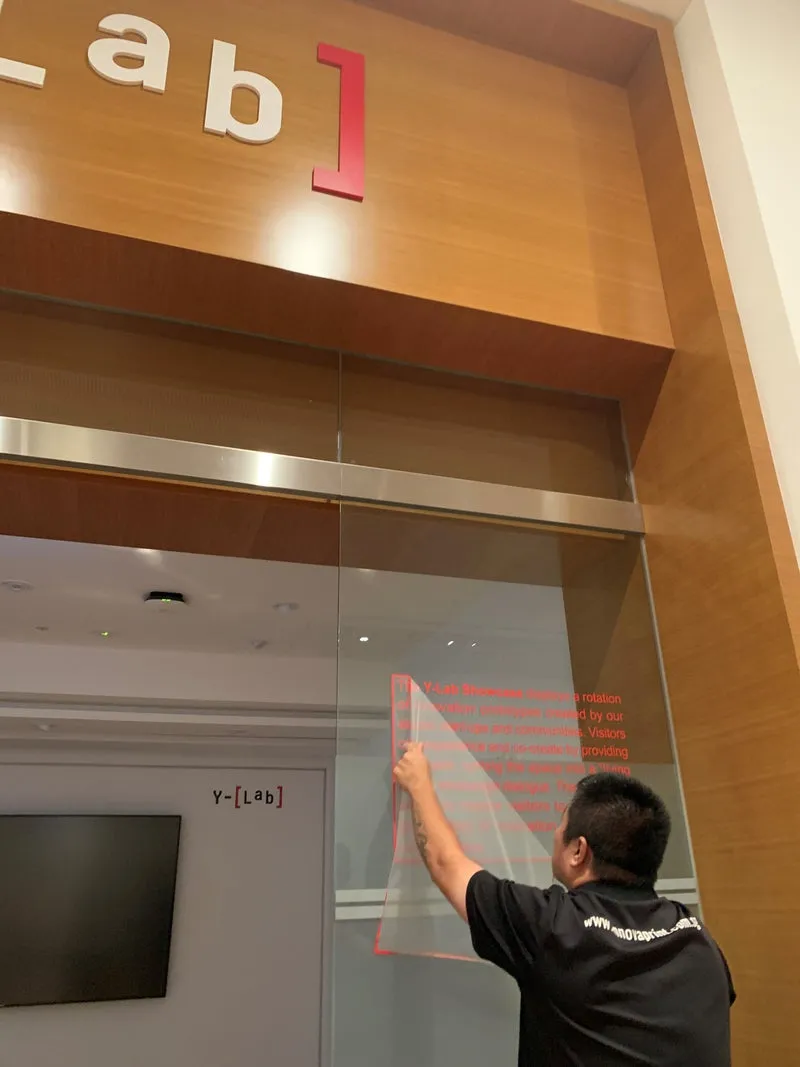
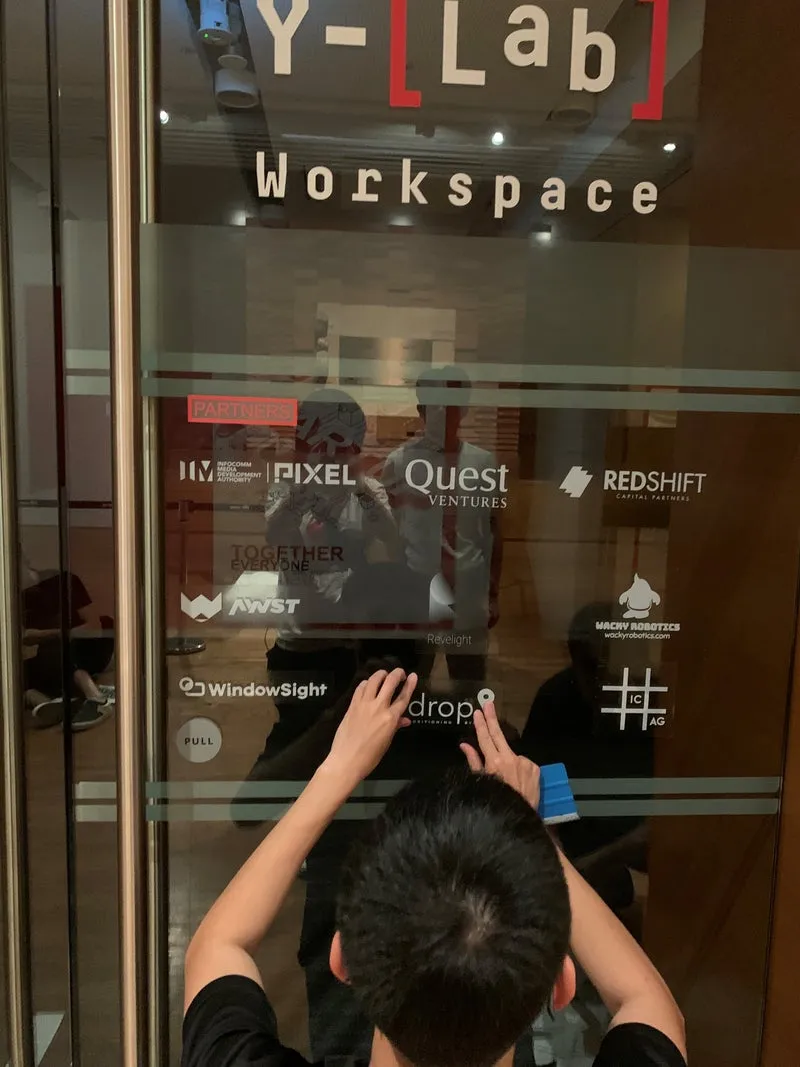
I was very puzzled when the designer asked me if I would be coming down to supervise initially. In my mind, this would be a half an hour job at best, paste sticker only what. Supervise what? In the end, it took a few hours and we were still not done. Two designers, two “installers” and a me and the “installers” had to come back another day because their colleagues made an error in printing. While happily chatting with the designers about how I had automated cropping of artwork images and how I know the pain of logo placement in posters (which seems to require 90% of effort on commercial design of collaterals) and suspect that it can be automated, there I was - looking at how these men would place the sticker on the wall, use instruments and everyone’s eye power to make sure things are aligned, then spray water and iron over the sticker - and I’m like: I don’t think this will be automated. Such manual efforts are actually much safer from automation than white-collar office work, at least in corners of the world where the former is paid much lower than the latter on average. This is a pretty long anecdote to say that: policies and incentives matter when it comes to whether new technologies get invented and/or go-to-market, duh.
So I believe in being lazy effectively and in the importance of automating away the boring, repetitive and routine tasks as much as possible so that humans can free our capacity to be more creative or to exercise higher cognitive abilities. I realised that whether such automations or technologies get created will depend on the relative cost of labour vs. capital in the first place. But do we always want to automate away ever damn thing? Is efficiency gain the only criterion by which we want to evaluate the creation and adoption of new technologies in society? Those are the questions that I’m left with after a visit to the Association for Persons with Special Needs (APSN) during Singapore International Foundation’s Arts for Good Fellowship.
As part of rehabilitation and occupational therapy, APSN has created environments for persons with mild intellectual disability to work in “mock” kitchens, aided by assistive gloves for handling knives, amongst other things. We were standing outside the room and I looked as these people put a piece of paper into these plastic packaging boxes, then stacked these boxes on top of one another - perfect fit for my ideas of the sort of work that should be automated. It takes these people 3 months to learn to do these boring, repetitive and routine tasks that can be automated. Should this be automated? Intuitively, I know that this is the wrong context to even be asking this question. The incident and the encounter itself though, made me realise that so much of human lives are abstracted away or forgotten altogether in mainstream discourse about technology. Above, I talked of “automating away the boring, repetitive and routine tasks as much as possible so that humans can free our capacity to be more creative or to exercise higher cognitive abilities” and there I was, standing outside a room full of people who takes 3 months to learn to do the very things I’m advocating to automate away.
Measuring Human Happiness
In our bid to become a Smart Nation, in our obsession with the Gross Domestic Product (GDP), we have truly optimised for everything that is measurable, “except that which makes life worthwhile”. Which is the point behind the Environmentally Responsible Happy Nation Index (ERHNI) by the way, just saying.
The questions that remain at the back of my head (rather than front and center, as my primary passion is still focused on problem solving rather than philosophy or ethics) are then: on what basis should we go about determining the allocation of resources, if not only by the efficiency criterion alone? Indeed, if efficiency (as measured by total output per unit of input) is the sole criterion, we might as well replace ourselves all with robots instead. There is also the equity criterion which I don’t know enough to comment on yet, and my suspicion is that there exist “non-monetary markets” or matching economies in which success is simply matches that wouldn’t have taken place if it were not for the institutions or mechanisms designed to facilitate such trades. Kidney exchanges come to mind, amongst other things.
The argument that I set out to make in my manuscript titled “Clearing the Air on the Environmentally Responsible Happy Nation Index 2016-2018” is then that it’s ironic how the science of scarcity acts as if the planet has unlimited resources for growth. Due consideration of happiness provides a valuable lens through which to compare the relative performance of interventions at a community level, and to complement policy analysis on a broader basis. Going back to A.I., automation, art and all that, quantitative studies on their well-being impacts are important in informing social choice. This does preordain the importance and value of data science though it is not to say that qualitative stories and methods don’t matter too.
The Art of Dreaming
If anything, “intelligence is the ability to hold two opposing ideas in mind at the same time and still retain the ability to function”. Data and stories, art and science, they can be consumed together - we contain multitudes. We must continue dreaming, building alternative futures and interrogating for whom and for whence do we make all these material progress with art as an arsenal.
Thus for the first time since his creation man will be faced with his real, his permanent problem – how to use his freedom from pressing economic cares, how to occupy the leisure, which science and compound interest will have won for him, to live wisely and agreeably and well. — John Maynard Keynes
I wanted to alliterate on the title of this post and will expound on the anti-discrimination component another time.
Originally published on PubPub at erniesg.pubpub.org/pub/eog11k9z.